Blog
Why Your AI Agent Needs Its Own Server
April 17, 2026
The hidden costs of API-only AI deployment and why owning your infrastructure is the smarter long-term play.
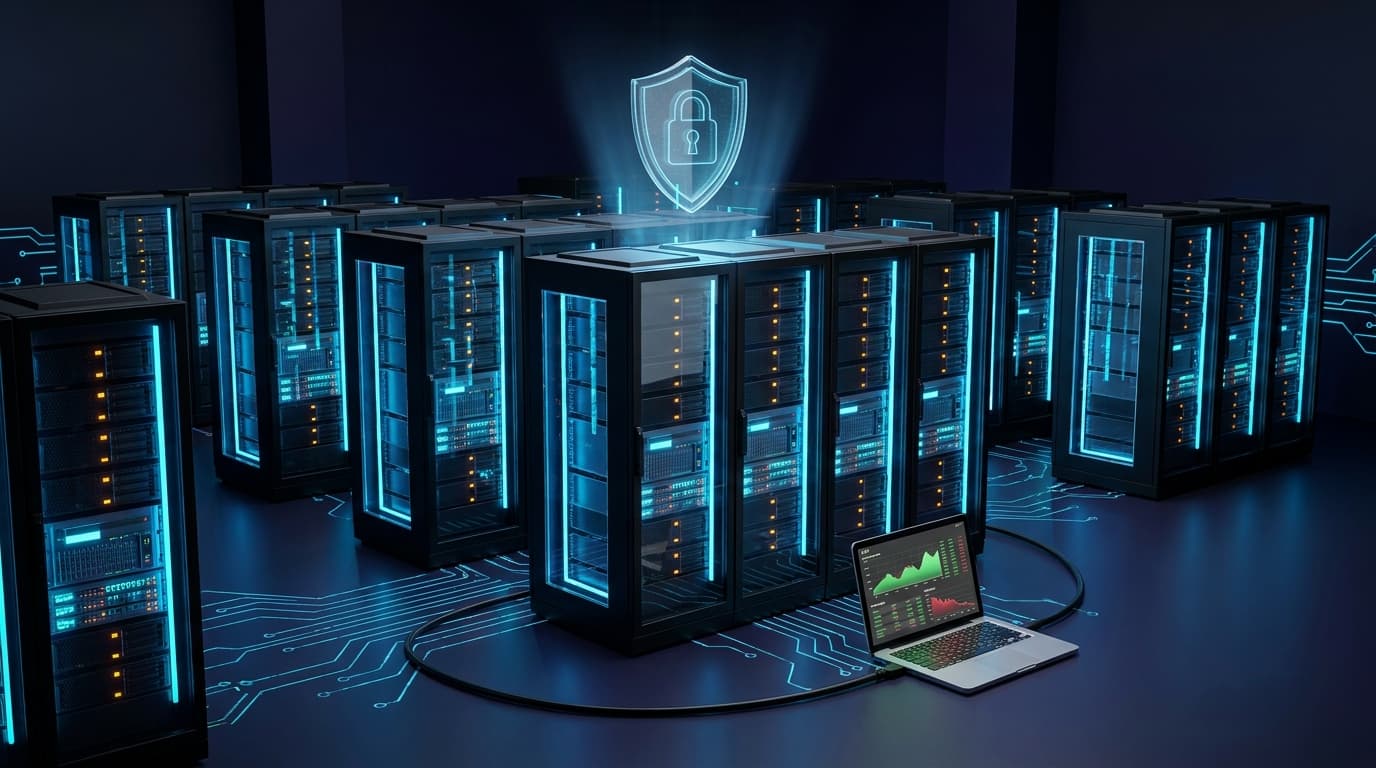
Beyond the API: Why infrastructure ownership matters for production AI agents.
The API Dependency Problem
Here's the uncomfortable truth about building AI agents on OpenAI or Anthropic APIs: you're building your business on someone else's infrastructure, and you have no control over it.
For prototyping, that's fine. API calls are cheap, setup is instant, and you can iterate fast. But once your agent moves into production — handling real customer queries, processing sensitive data, or driving business decisions — the API dependency becomes a liability.
What happens when the API goes down? Your agent stops working. No warning, no recourse. Your customers see errors, your team scrambles, and you're helpless because the service lives on someone else's servers.
What happens when prices go up? They will. Anthropic and OpenAI have both raised prices repeatedly. Your margins shrink, your pricing becomes less competitive, and you're stuck absorbing costs you can't control.
The real risk: you don't own the infrastructure your business depends on. Every successful AI agent eventually faces this reckoning — do we keep renting, or do we start owning?
Hidden Costs of API-Only
Let's talk about what you're actually paying for — and what you're not seeing.
Per-Token Pricing Adds Up Fast
The advertised prices look reasonable: $0.01 per 1K tokens here, $0.03 there. But in production, agents make many calls per conversation — context retrieval, multiple reasoning steps, tool calls, output generation. A single user interaction can burn through hundreds of thousands of tokens.
At scale, a million API calls per month easily becomes a $10,000+ monthly bill. And that's assuming your usage stays consistent — it won't. Peak times, new features, seasonal spikes all spike costs unpredictably.
Rate Limits: The Scaling Ceiling
Every API has rate limits. Some are generous, some are strict, but all are finite. When your agent goes viral or your business grows, you hit the wall. Requests queue, timeouts mount, and your agent slows to a crawl — not because of your code, but because someone else's infrastructure said so.
Data Privacy: Who's Looking at Your Data?
Every prompt and response passes through third-party servers. That's your customer data, your business logic, potentially your proprietary information. You're relying on their security, their compliance, and their data handling practices.
Compliance: Who's Responsible?
GDPR, HIPAA, SOC2 — these frameworks have opinions about where data lives and who processes it. When your AI vendor stores your data in their cloud, you've just added a compliance dependency you didn't sign up for.
The "Cheap" API Isn't Cheap When You Scale
The API looks cheaper than building your own infrastructure — until you hit volume. Then the math flips. At 100K calls/month, the API feels reasonable. At 10M calls/month, you're spending more than a dedicated server would cost, with less control.
What "Own Server" Actually Gives You
When you run your agent on your own server, the dynamics change completely.
Predictable Costs
One flat server bill. You know what you're paying this month, next month, and next year. No surprises, no per-call metering, no budget spreadsheets. A dedicated GPU VM runs $300–$800/month depending on specs — predictable, fixed, budgetable.
Control
You decide when to upgrade. You pick which model runs. You can swap Ollama for vLLM, downgrade from a 70B to a 7B model, or run multiple models on the same hardware. Your infrastructure, your rules.
Privacy
Your data never leaves your server. No third-party logs, no external processing, no data pipelines you don't control. This matters for medical applications, legal work, financial services, or any business where data sensitivity is non-negotiable.
Reliability
You control uptime. You set up redundancy. You choose when to deploy updates. When something breaks, you fix it — you don't file a support ticket and wait. For mission-critical agents, this sovereignty is invaluable.
Customisation
Want to fine-tune a model on your own data? That's hard to do well through an API. On your own server, you have the compute, the data access, and the freedom to experiment with custom model weights, LoRA adapters, and specialist configurations.
The Real-World Math
Let's run the numbers.
The API Path
- 1 million API calls/month
- Average cost: $0.01 per call (conservative estimate)
- Monthly cost: $10,000
- Annual cost: $120,000
The Self-Hosted Path
- Dedicated GPU VM (A100 or equivalent)
- Monthly server cost: ~$500–$800
- Setup/maintenance: ~$200/month (conservative)
- Monthly cost: ~$1,000
- Annual cost: ~$12,000
The Difference
| Metric | API-Only | Self-Hosted |
|---|---|---|
| Monthly cost | $10,000 | $1,000 |
| Annual cost | $120,000 | $12,000 |
| 3-year cost | $360,000 | $36,000 |
| Data control | Third-party | Full ownership |
| Uptime control | No | Yes |
| Scaling flexibility | Rate-limited | Full control |
Break-even: 3–6 months depending on volume.
Beyond the cost savings, there's the asset question. Server infrastructure is an asset — it has resale value, it can be repurposed, it's something you own. API calls are purely consumptive — you rent, you spend, you get nothing in return.
When It Makes Sense
Self-hosting isn't always the right answer. Here's when it wins:
High Volume
If you're making tens of thousands of API calls daily, the server math works in your favour almost immediately. The break-even point is lower than you think.
Privacy-Sensitive Work
Medical records, legal documents, financial data — industries with strict compliance requirements favour local infrastructure. You can't easily use an API when HIPAA or GDPR says the data must stay in your environment.
Custom Models
Fine-tuned models, domain-specific adapters, LoRA configurations — these don't work well through generic API endpoints. You need direct model access and compute control.
Long-Term Commitment
If AI is core to your product — not a feature, but the product — own the stack. The infrastructure is a competitive advantage, not a cost centre.
When API-Only Makes Sense
Not every situation warrants self-hosting. Stick with APIs when:
Prototyping
Move fast, test hypotheses, don't commit to infrastructure until you know the product works. APIs are perfect for this phase.
Low Volume
Under 10,000 calls/month? The server cost (~$500/month minimum) doesn't justify. The API is genuinely cheaper at low volume.
Infrequent Usage
On-demand makes sense when your agent rarely runs. If it's a weekly or monthly tool, renting beats owning.
The rule of thumb: if you're still iterating on the product, rent. If you're shipping to production, own.
The Hybrid Approach
The smart play for most teams: start with API, migrate to self-hosted as you scale.
Use the API for:
- Prototyping and testing
- Edge cases and low-volume features
- Fallback when your server is overloaded
Run self-hosted for:
- Core workload (the 80% of requests that are predictable)
- Privacy-sensitive operations
- High-volume paths
This is the strategic view: own your core, rent the edges. You maintain control where it matters, while keeping flexibility where it doesn't.
CTA
If you're serious about AI agents, take the infrastructure seriously.
The API path is fine for prototyping — it got you here. But if you're building for production, the math favours ownership. Predictable costs, full control, privacy, reliability, customisation — these aren't luxuries, they're necessities for serious AI applications.
Own your server, own your destiny.
The question isn't whether self-hosting makes sense — the math is clear. The question is when to make the switch. If you're already hitting $5K/month in API costs, the answer is now.
Next in the series: [Agentic Hosting #3] Running Multiple Agents in Production — orchestration, load balancing, and keeping everything running smoothly.